How Texture Creates Satisfaction in the Body
(+ Watercolor Techniques)

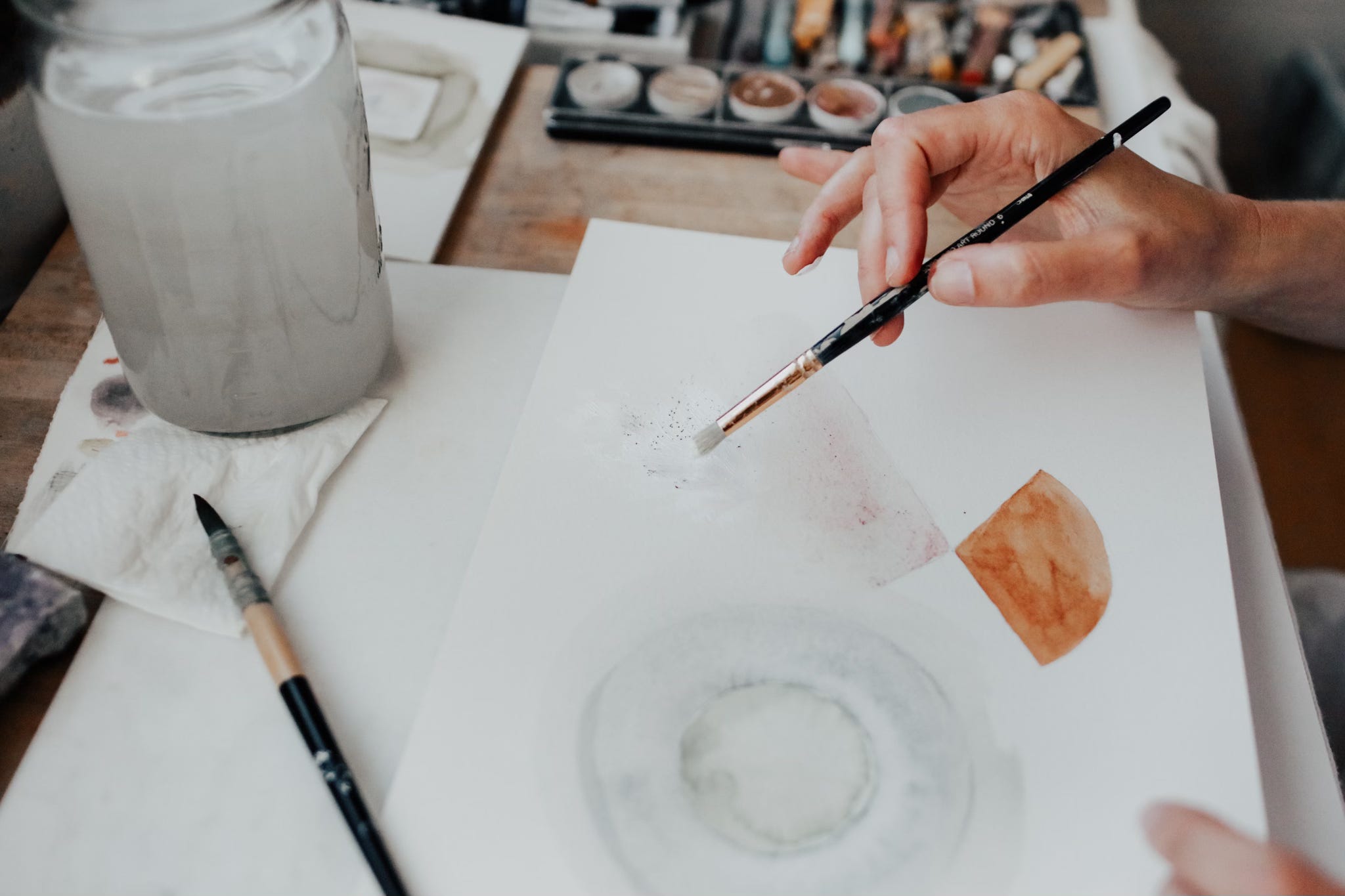
When I was getting back into watercolor, I was in such an open exploratory state.
I wasn’t reading about techniques or taking a class. It was a compulsory urge, (hello Manifestor in Human Design here, before I even knew anything about Human Design), to play with this specific paint medium. A love affair began with the softness and fluidity of watercolor, even when using bold colors.
I felt like all of a sudden I had returned to and found the medium that matched a feeling inside me. Resonant not only to what I felt, but to what I was seeing in my mind’s eye of my unique channel. It was a very somatic experience and I just enjoyed, with curiosity, what I could do with the paint itself.
I’m honestly surprised that I didn’t have more of an inner critic around how I was using the medium. Thank goodness, inner critics take vacations from time to time! But also, looking back, I didn’t know or follow a lot of other artists doing watercolor at the time. Even though I know there were tons of them out there, this was before social media is what it is today.
I began playing with a few things I had learned from my art classes in college. In those classes I was using acrylic or oils, but they still gave me some ideas on getting my fingers in the paint a little bit, adding other mixed media here or there like soft pastel, graphite, or gouache paint.
I noticed that adding different textures to the work gave my body this feeling of satisfaction, balance, and peace when looking at the overall composition. I was also able to explore how to create visual resonance with what I was intuitively feeling when it came to painting different energetic signatures, so to speak.
I want to pause here for a second and talk about some reflections on how adding texture to my work gave my body this feeling of satisfaction, balance, and peace. Because as I am writing this, I’m thinking… let’s unpack why this is!
I’ve thought about this a lot over the years, and I think there’s something really significant happening when we work with texture. It’s not just visual, it’s also somatic. It’s felt in my body anyhow.
I believe this because when you create texture, you’re engaging more of your senses. You’re not just seeing the painting, you’re almost feeling it through your eyes. Your body recognizes texture as something tactile, real, and dimensional. Even if you’re not physically touching the dried paint, your nervous system responds to these visual cues of roughness, softness, depth, variation. It’s why when I go to a museum to see famous works of art, I like to get up close and stare as long as I can without getting in the way of others enjoying the work too.
And there’s something about the act of creating texture that’s deeply embodied too. It’s physical. It’s not just your mind deciding what to paint, it’s your hand dragging a dry brush across paper, your arm flicking paint into the air, your fingers pressing a paper towel into wet pigment. You’re in your body when you paint and create texture. Most likely because you’re present.
I also think texture mirrors the reality of our lived experience. Life isn’t smooth or perfect. It’s layered, it’s rough in some places, soft in others, it has lots of unexpected marks, blooms and interruptions. When we allow texture into our paintings, we’re kind of allowing that truth to be visible. We’re saying, yes, complexity is beautiful and yes, imperfection has a place here too.
For me, that permission and visual acknowledgment of complexity and realness, creates a kind of nervous system settling for my system. Like my body relaxes a little bit because the painting isn’t trying to be perfect. It’s trying to be true.
So when I say texture creates satisfaction in the body, this is what I mean. It engages your beautiful senses, keeps you present, and reflects the textured, layered reality of being human.
For me, that feels really good because it feels really resonant and true to life.
I used to be a full time teacher, but I have a life theme of self learning. So there is deep respect in me for both access points into learning.
Much, much later in time and in my painting practice, I began going through different watercolor technique books and some YouTube channels to refine my practice of technique. This was really fun, because by this point I was not only very comfortable with the medium of watercolor, but it was also affirming to what I had discovered through my own self learning, play, and exploration.
I was, of course, then able to push things a little further, build upon, expand, and refine my techniques by watching others share these skills in focused methods.
My hope is that you enjoy your own explorations and play, allow for that gentle curiosity within to lead you to try things, (give that inner critic permission to take a long ass vacation!) as that is such an open place for creativity to find you, while also giving you a place to build upon and intentionally use and learn some fundamental watercolor techniques.
In her book Big Magic, Elizabeth Gilbert talks about this exact thing. About how creativity wants to play with us, how curiosity matters more than perfection, how we don’t need permission to explore. And if you want to listen to her thoughts directly on her perspective of creativity, I highly recommend listening to her episode on The Telepathy Tapes podcast. It’s so good and so inspiring. I have had very real experiences myself of what she speaks to regarding ideas choosing those that are ready to bring something into form… If you haven’t read her book or listened to her speak on this, to know what I'm talking about, I can’t wait for you to learn more!
This week, we’re exploring texture and layering. These are some simple techniques that create dimension, that give your paintings that yummy tactile richness.
Some of you will already be doing versions of these intuitively. Some of you will be discovering them for the first time. May this lesson give you permission to experiment and play even more.
Either way, we’re building on what you already know in your body, which is so so exciting!
What We’re Exploring This Week
Texture and layering are what transform a flat wash into a living, breathing painting.
Texture creates visual interest, tactile quality, and organic unpredictability. Layering creates depth, luminosity, and complexity.
This week, we’re exploring four texture techniques and the art of transparent layering.
I’m Lindsay King. An artist, energy practitioner, and devoted student of beauty in its many forms. The Tender Hearth is my space to share paintings, reflections, and creative rituals that honor beauty in its most authentic soul human way. I’m so grateful you’re here. May this space remind you of your own warmth and the art that lives within you. You can also find me on IG and my Website where I share my paintings, Altar offerings, and Reiki Sessions. As well as my podcast with my Co-Host Eve Daher Kinsella, on Spotify and Apple Podcast
